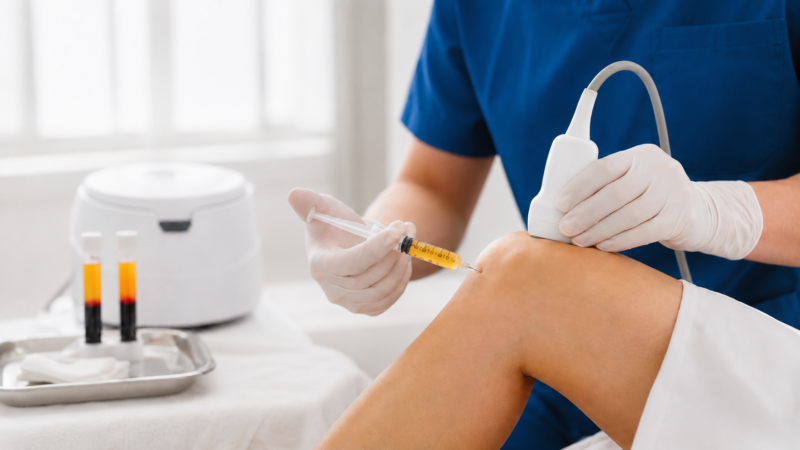

Many patients are told they need an “injection” for pain, but not all injections do the same thing.
One of the biggest mistakes in musculoskeletal and pain medicine is treating injections as interchangeable “pain shots.” Prolotherapy, PRP, and steroid injections each work differently. They have different goals, different risks, and different roles in a treatment plan.
At Manhattan Pain Medicine, we think about these injections in three categories: tightening, healing, and calming.
Prolotherapy: The Tightener
Dextrose prolotherapy is often used when pain is driven by joint instability, ligament laxity, or hypermobility.
The goal is to stimulate a controlled local healing response in the joint capsule or surrounding ligaments. By encouraging collagen activity, prolotherapy is designed to help tighten and strengthen loose or unstable structures over time.
This can be especially important in patients with hypermobility spectrum disorder or Ehlers-Danlos syndrome, where muscles may tighten and spasm because they are trying to compensate for joints that are not stable enough.
Another advantage is that prolotherapy can often be combined with local anesthetic. If numbing the joint temporarily improves the pain, it can help confirm that the treated structure is part of the pain generator.
PRP: The Healer
Platelet-rich plasma, or PRP, is used when the goal is tissue repair.
PRP is made from a patient’s own blood, which is processed to concentrate platelets and growth factors. It may be considered for tendon injuries, labral tears, ligament injuries, more advanced joint degeneration, or persistent soft tissue damage.
PRP is typically more inflammatory and can be more painful after treatment. It also cannot be used the same way as a diagnostic numbing block, because local anesthetic may interfere with platelet function.
Steroids: The Fire Extinguisher
Steroid injections are powerful anti-inflammatory tools. They can be helpful when the main problem is an acute inflammatory flare, irritated spinal nerve, autoimmune-related enthesitis, or painful scar tissue and adhesions.
But steroids are not regenerative. They calm inflammation, but they do not tighten ligaments or repair torn tissue. When used too often, or in the wrong structure, they may weaken connective tissue and mask the real mechanical problem.
What a Proper Workup Requires
The key is not simply choosing an injection. The key is understanding why the pain is happening.
Is the joint unstable? Is the tissue torn? Is there active inflammation? Is the nervous system sensitized? Is there uncontrolled autoimmune disease or mast cell activation that could make regenerative treatment flare?
In complex patients, the order matters. Sometimes inflammation must be calmed first. Sometimes instability must be addressed before tissue healing can succeed.
Our Approach at MPM
At Manhattan Pain Medicine, we use injections as diagnostic and therapeutic tools within a larger plan, helping patients understand whether their pain requires tightening, healing, calming, or a more layered approach.