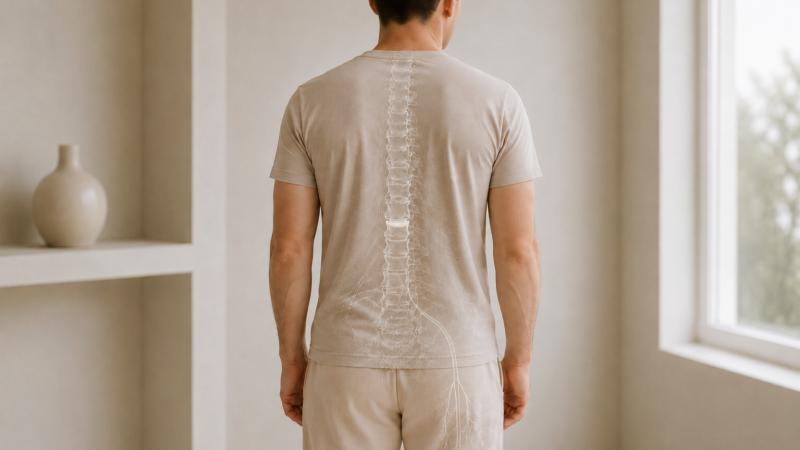

Sciatica, or Lumbar Radiculopathy, is commonly used to describe pain that travels from the low back, buttock, or hip down the leg. It is often caused by irritation or compression of the sciatic nerve or the nerve roots that help form it.
The challenge is that not all radiating leg pain comes from the same place. The source may be the lumbar spine, the disc, the sacroiliac joint, the hip, the piriformis muscle, or a nerve that is being irritated in more than one location.
When the workup focuses only on one MRI finding or one tight muscle, the full pattern can be missed.
The Classic Cause: Lumbar Nerve Irritation
The most familiar cause of sciatica is a lumbar disc herniation, often at L4-L5 or L5-S1. When a disc tears or bulges, it can irritate nearby nerve roots chemically, mechanically, or both.
Spinal stenosis and facet arthritis can also crowd the space where nerves travel, creating pain that may feel sharp, burning, electric, or zapping down the leg.
When the Hip or Pelvis Is Involved
The sciatic nerve travels near the piriformis muscle in the buttock. If that muscle tightens or spasms, it can irritate the nerve and create sciatica-like symptoms.
But the piriformis is often not the root problem. It may be guarding in response to an unstable sacroiliac joint, a hypermobile hip, or an irritated spinal nerve. Treating only the tight muscle may provide temporary relief while leaving the driver in place.
Other mechanical issues, including ischiofemoral impingement or anatomical variants such as Bertolotti syndrome, can also mimic sciatica by altering the way the pelvis, spine, and nerves move together.
Why Leg Pain Is Misdiagnosed
A pinched nerve in the back does not always cause obvious back pain. It may show up as hip pain, calf pain, heel pain, or foot pain. This is why some patients receive treatment for bursitis, Achilles tendonitis, or plantar fasciitis when the source may be higher up in the spine.
In other cases, the nerve may be irritated in two places at once. This “double crush” pattern can amplify symptoms and make the pain harder to diagnose with a single test.
Our Approach at MPM
At Manhattan Pain Medicine, we evaluate sciatica and radiating leg pain by mapping the full lumbopelvic region, helping patients identify whether the pain is coming from the spine, disc, hip, pelvis, muscle guarding, nerve tension, or a layered mechanical pattern.