
Steroid injections and regenerative medicine are often discussed together, but they serve very different purposes.
Steroid injections are designed to reduce inflammation and calm irritated tissue. Regenerative treatments, such as prolotherapy or platelet-rich plasma, are used to stimulate a healing response in weakened or injured connective tissue.
Both can be useful. The key is understanding when pain needs to be quieted and when the underlying structure needs to be supported.
What Steroid Injections Do Well
Steroid injections can be helpful when inflammation is the main driver of pain. They may reduce swelling, calm an irritated joint, decrease nerve inflammation, or help a patient move through a severe flare.
This can be especially important in autoimmune or inflammatory conditions, where the immune system is actively irritating the joints, tendons, nerves, or surrounding tissues.
But steroid injections are not designed to repair torn, stretched, or unstable tissue. They are a tool for calming inflammation, not rebuilding the foundation.
When Steroids May Not Be the Right Tool
If pain is being driven by ligament laxity, joint instability, or hypermobility, repeated steroid injections may not address the reason the pain keeps returning.
In some patients, a loose joint causes the surrounding muscles to guard. That guarding can create spasms, tendon pain, fatigue, and secondary joint irritation. A steroid may temporarily calm the pain, but the joint may still be unstable underneath.
This is why the source of the pain matters.
What Regenerative Medicine Tries to Do
Regenerative medicine uses the body’s healing response to target weakened or injured tissue.
Prolotherapy uses a dextrose solution to create a controlled local healing stimulus around ligaments, tendons, or joint capsules. The goal is to help improve support in areas that are too lax or chronically strained.
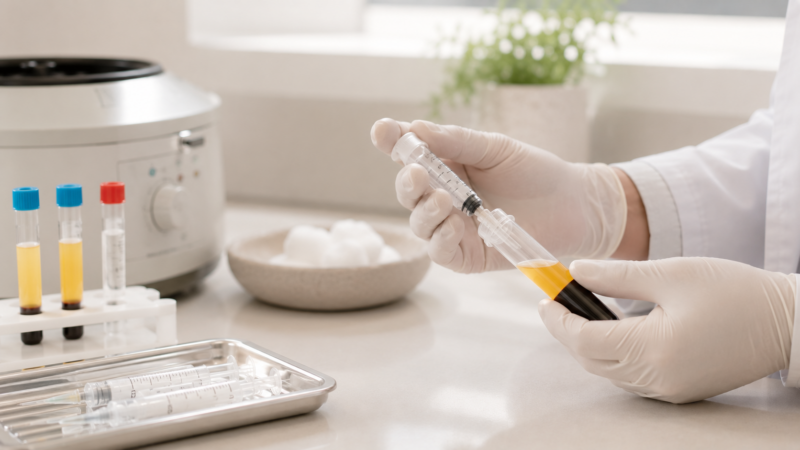
Platelet-rich plasma, or PRP, uses concentrated platelets from the patient’s own blood. These platelets release growth factors that may support healing in certain tendon, ligament, joint, or soft tissue injuries.
Why Timing Matters
Steroids and regenerative medicine work through very different mechanisms. Steroids suppress inflammation. Regenerative treatments depend on a controlled inflammatory healing response.
For that reason, timing matters. In a patient with uncontrolled autoimmune inflammation, mast cell activation, or severe nervous system sensitization, regenerative treatment may trigger a flare if the system is not stabilized first.
In other cases, once inflammation is controlled, regenerative treatment may be considered to address the structural instability that keeps the pain cycle active.
Our Approach at MPM
At Manhattan Pain Medicine, we evaluate whether pain is being driven by inflammation, joint instability, tissue injury, hypermobility, autoimmune disease, or a layered pain pattern so treatment is matched to the true source of the problem.