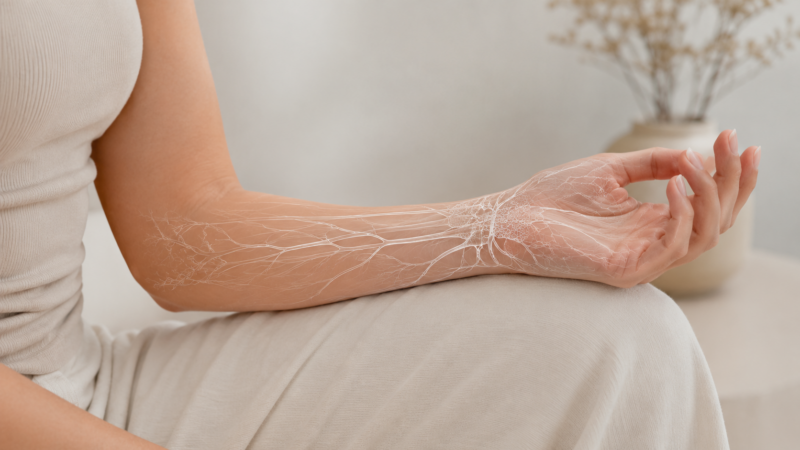

Complex Regional Pain Syndrome, or CRPS, is one of the most misunderstood chronic pain conditions. It often begins after an injury, surgery, fracture, sprain, or nerve irritation, but the pain becomes much larger than the original event.
CRPS involves an overactive pain and autonomic nervous system response. The body’s fight-or-flight system becomes sensitized, and normal sensations may be interpreted as dangerous. Pain can become burning, electric, swollen, temperature-sensitive, and difficult to control.
Because CRPS does not always show clearly on standard imaging, patients are often told their scans look normal or that nothing serious is wrong.
Why CRPS Is Missed
CRPS pain often looks different from typical injury pain. A muscle tear or fracture may feel sharp and localized. CRPS is often more diffuse, burning, throbbing, prickling, or hypersensitive.
Patients may also experience symptoms that seem unrelated, including swelling, color changes, abnormal sweating, temperature changes, tremors, stiffness, or changes in skin, hair, or nail growth.
When specialists evaluate each symptom separately, the larger sympathetic nervous system pattern can be missed.
Why Pain Can Spread
CRPS may start in one limb or one region, but the nervous system response can spread beyond the original injury site.
The sympathetic nervous system communicates through interconnected nerve hubs. When one area becomes sensitized, the alarm response may affect nearby or distant regions. This can make the pain feel confusing, migrating, or out of proportion to the original injury.
This does not mean the pain is exaggerated. It means the nervous system has become part of the disease process.
What a Proper Workup Requires
A proper CRPS workup begins with a careful clinical exam. Providers should look for signs consistent with the Budapest Criteria, including allodynia, hyperalgesia, swelling, temperature or color asymmetry, sweating changes, stiffness, tremor, and skin or nail changes.
The workup should also ask what triggered the CRPS and what may be keeping the nervous system activated.
Diagnostic Blocks and Nervous System Testing
Sympathetic nerve blocks can help clarify whether pain is being maintained by the sympathetic nervous system. For upper body symptoms, this may involve a stellate ganglion block. For lower extremity symptoms, a lumbar sympathetic block may be considered.
IV lidocaine or ketamine trials may also help identify severe nervous system sensitization in selected patients.
Our Approach at MPM
At Manhattan Pain Medicine, we evaluate CRPS as a layered pain condition, helping patients identify both the amplified nervous system response and the underlying trigger that may be keeping the pain cycle active.