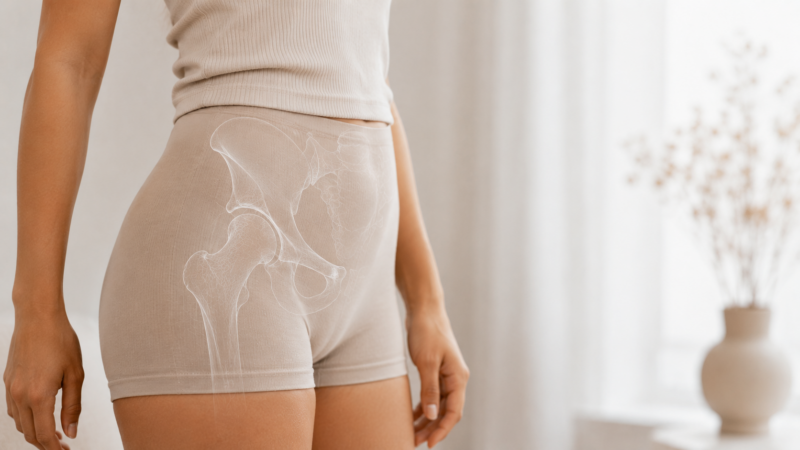

Many patients develop deep hip, groin, or outer hip pain and are told they have a labral tear, trochanteric bursitis, or IT band problem. They may try physical therapy, steroid injections, or even hip surgery, yet the pain continues.
That can happen when the painful area is not the true source of the problem.
The hip is part of a larger lumbopelvic system that includes the lumbar spine, sacroiliac joints, pelvis, nerves, muscles, and connective tissue. When one part of that system is not functioning well, pain may be felt in the hip even when the hip joint itself is not the main driver.
When the Spine Refers Pain to the Hip
A nerve irritated in the lower back does not always cause obvious back pain. The L4 and L5 nerve roots can refer pain into the hip, groin, thigh, or outer leg.
A disc herniation, facet arthritis, or spinal stenosis may therefore feel like hip bursitis, tendon pain, or a local hip injury. If treatment focuses only on the hip while the nerve irritation is coming from the spine, relief may be limited.
When the Pelvis or SI Joint Is the Driver
The sacroiliac joint connects the spine to the pelvis. If this joint is unstable, hypermobile, or irritated, the body may change how it walks, stands, and loads the hip.
The hip muscles may then work harder to stabilize the pelvis. Over time, this can create secondary pain around the hip, buttock, groin, or outer thigh.
This is especially important in patients with hypermobility, prior falls, pregnancy-related pelvic changes, or recurrent pelvic and low back pain.
Hidden Hernias and Nerve Entrapment
Occult hernias can also mimic hip or groin pain. Inguinal, femoral, or obturator hernias may irritate nearby nerves and create deep pain that feels like it is coming from the hip.
The psoas muscle can add another layer. This deep hip flexor connects the spine to the femur. When it tightens or guards, it may irritate nerves traveling through the pelvis, contributing to burning, sharp, or radiating pain in the hip, groin, or genital region.
What a Proper Workup Requires
A proper workup should ask where the pain is being generated, not just where it is felt.
That may include examining the lumbar spine, SI joint, hip, pelvic mechanics, hernia regions, nerve tension, and muscle guarding. In some cases, targeted diagnostic blocks can help clarify whether the pain is coming from the spine, SI joint, hip joint, hernia canal, or pelvic nerves.
Our Approach at MPM
At Manhattan Pain Medicine, we evaluate hip pain through the full lumbopelvic system, helping patients identify whether symptoms are coming from the hip itself, the spine, pelvis, SI joint, hidden hernia, nerve irritation, or a layered mechanical pattern.