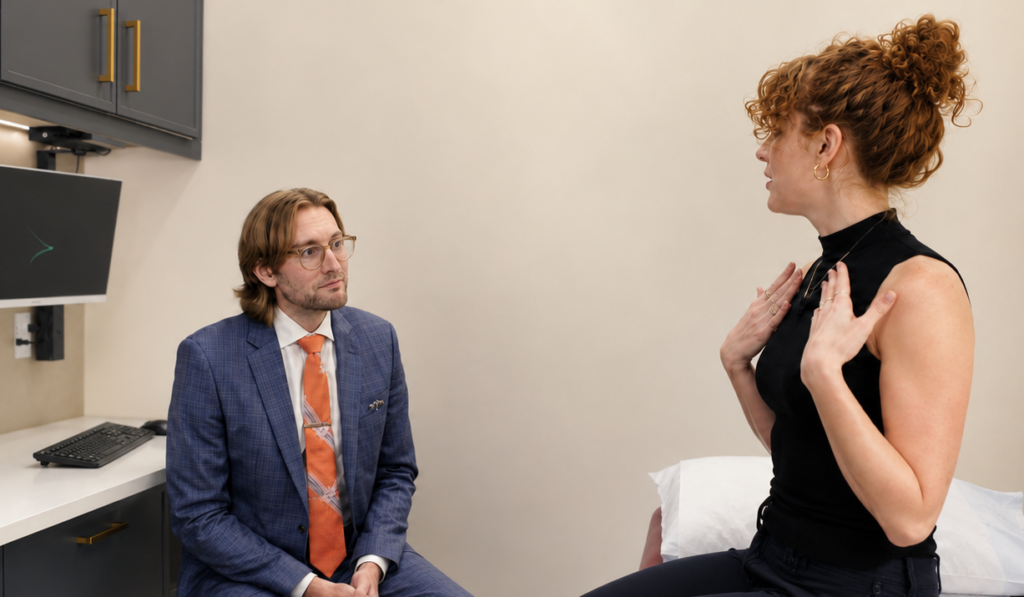

Written in collaboration with Adam Gvili, PT, DPT, board-certified physical therapist and owner of Pelvis NYC.
Hard flaccid syndrome can be alarming because the symptoms feel very local: a semi-rigid or contracted penis while flaccid, altered sensation, erectile changes, pelvic floor tightness, testicular aching, or perineal discomfort. But the penis may not be where the problem begins.
At Manhattan Pain Medicine, we approach hard flaccid syndrome as a broader pelvic pain problem that may involve muscle guarding, nerve irritation, autonomic activation, hip or pelvic mechanics, and, in selected patients, a vascular contributor.
For this article, Adam Gvili contributes the physical therapy perspective on pelvic floor guarding, movement, and rehabilitation.
Hard Flaccid Is Often More Than a Penile Problem
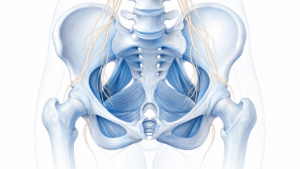
The pelvic floor works with the hips, abdominal wall, sacroiliac joints, lower spine, deep hip rotators, and autonomic nervous system. When one part of that system feels threatened, the body may increase muscle tone to protect it.
Adam Gvili adds that the muscles are only part of the picture: “Hard flaccid increasingly looks like a form of dysautonomia, a problem with the autonomic nervous system, which controls blood flow, smooth muscle and the body’s stress response. Urologists studying the condition describe it as sympathetic overdrive, often after some kind of pelvic or genital strain, where the ‘fight or flight’ side of the nervous system stays switched on and the normal blood-flow signals to the penis get disrupted.”
The obturator internus is especially relevant because it helps stabilize the hip and sits close to the pudendal nerve. Persistent guarding in this region can contribute to pelvic floor tension, sitting pain, genital discomfort, and symptoms along the pudendal nerve pathway.
A patient may therefore feel symptoms in the penis even when the structure driving the problem is farther upstream.
Why Sensation Can Change
Penile numbness or reduced erotic sensation is one of the most distressing symptoms patients describe.
Not every sensory change means permanent nerve injury. Persistent pain and threat can alter how the nervous system processes sensory information. In some patients, reducing a dominant pain generator changes genital sensation as well.
That is why we look beyond the penis itself before concluding that a distal nerve has been permanently damaged.
Adam also points to the connective tissue around the penis: “These layers form one connected system running from the belly through the groin and perineum to the penis, so tension or restriction in one area can affect the others. Fascia is also not just passive wrapping. Laboratory research shows it contains contractile cells that can stiffen the tissue, and researchers have proposed that stress and sympathetic activity may influence that stiffness.”
From the physical therapy perspective, he adds: “In my experience, pelvic floor physical therapy is usually the first line of treatment for hard flaccid. When we evaluate these patients, we often find pelvic floor tightness, along with guarded breathing, restricted hips and poor tolerance for sitting.”
When the Hip or Pelvis Is Driving the Guarding
Hard flaccid symptoms sometimes begin after vigorous sexual activity, exercise, or another local trigger. But that event may occur on top of an already sensitized system.
Hip impingement, pelvic ring instability, pubic strain, sacroiliac joint dysfunction, or lower-spine irritation can cause the pelvic floor and deep hip muscles to work continuously as stabilizers. Once that protective pattern becomes established, simply stretching or relaxing the pelvic floor may not be enough.
Our goal is to understand why the muscles are guarding in the first place.
Where Pelvic Venous Congestion Fits In
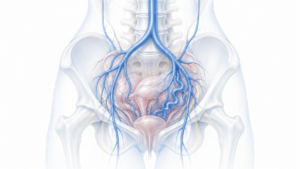
Some patients describe a different pattern: pelvic or scrotal heaviness, fullness, visible varicoceles, or aching that changes with position.
That raises the possibility of a pelvic venous disorder.
Conditions such as May-Thurner syndrome or Nutcracker syndrome can affect venous drainage from the pelvis or gonadal veins. They are not the cause of every hard flaccid presentation, but they may deserve consideration when symptoms suggest abnormal venous pressure or pooling.
An imaging finding alone does not establish the diagnosis. The anatomy has to make sense alongside the symptoms and vascular findings.
How We Evaluate the Overlap
Hard flaccid syndrome does not have one definitive test, so the evaluation focuses on separating possible contributors.
We may examine the hip, sacroiliac joints, abdominal wall, pubic region, pelvic floor, lower spine, pudendal and genitofemoral nerve pathways, and the patient’s vascular and autonomic symptom pattern.
When a specific structure appears suspicious, a targeted image-guided diagnostic injection can sometimes help determine whether reducing pain at that site also changes the patient’s familiar genital symptoms. If the pattern suggests venous disease, we coordinate further vascular evaluation.
Address the Driver, Then Retrain the System
Treatment depends on what the evaluation finds.
For some patients, pelvic floor and deep hip muscle guarding are the dominant issues. For others, the primary driver may be a hip, pubic, sacroiliac, spinal, nerve, or vascular problem keeping the pelvic floor in a protective state.
The goal is to identify what is primary, what is compensatory, and what has to change for the system to stop protecting itself.
In selected patients with a clearly identified musculoskeletal or instability-related pain generator, treatment may include prolotherapy or platelet-rich plasma (PRP) as part of a broader rehabilitation plan. These treatments are directed at the diagnosed musculoskeletal problem, not at hard flaccid syndrome itself.
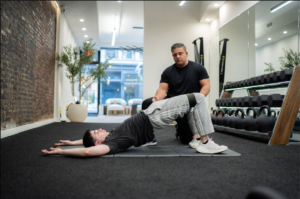
From the physical therapy side, Adam describes what happens next: “Treatment addresses both sides: hands-on release of the pelvic floor muscles and surrounding fascia, internally and externally; breathing and downregulation work to calm the nervous system; and retraining so the muscles learn to relax at rest. When pelvic floor work alone isn’t enough, that’s when the broader evaluation described in this article becomes important.”
A Broader View of Hard Flaccid Syndrome
Hard flaccid syndrome is best approached as a clinical pattern rather than a single isolated penile disorder.
The pelvic floor may be central in one patient; in another, the hip, pubic region, lower spine, peripheral nerves, autonomic nervous system, or pelvic venous circulation may also matter.
The structure where symptoms are felt is not always the structure driving them. That is why our approach starts with discovery: understand the relationships first, then build treatment around what the individual patient actually needs.

About Pelvis NYC and Adam Gvili, PT, DPT
Adam Gvili, PT, DPT, is a board-certified physical therapist and owner of Pelvis NYC, a Chelsea, Manhattan practice focused on pelvic health, orthopedic rehabilitation, and movement-related conditions. His approach combines pelvic-floor and whole-body musculoskeletal assessment to identify factors that may be contributing to symptoms and guide individualized rehabilitation.