Scapular Dyskinesia
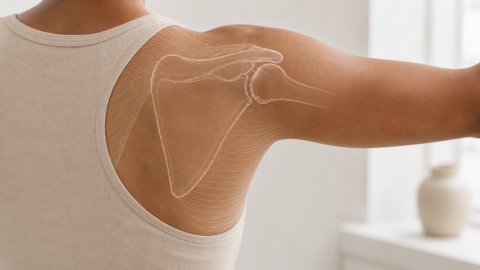
Scapular dyskinesia, also called scapular dyskinesis, describes altered movement or position of the shoulder blade during arm motion. The scapula plays an important role in shoulder function. It must glide, rotate, tilt, and stabilize as the arm reaches, lifts, pushes, pulls, throws, or supports weight. When scapular motion changes, the shoulder may not move as smoothly or efficiently.
Patients may notice shoulder blade pain, winging, clicking, snapping, fatigue, weakness, limited overhead motion, neck pain, upper back pain, or shoulder impingement symptoms. Some feel that the shoulder blade sticks out. Others feel that the shoulder tires quickly or does not feel stable during overhead activity.
Why Scapular Movement Matters
The shoulder depends on coordinated movement between the shoulder joint, shoulder blade, collarbone, ribs, spine, and surrounding muscles. If the scapula does not move well, the rotator cuff and shoulder joint may experience extra stress. This can contribute to impingement symptoms, tendon irritation, muscle guarding, or pain with overhead activity.
However, scapular dyskinesia is not always the root cause. It can also be a compensation. For example, a patient with rotator cuff pain may change shoulder blade movement to avoid pain. A patient with frozen shoulder may move the scapula more because the shoulder joint itself is stiff. A patient with nerve injury may have weakness that changes scapular position. A patient with hypermobility may rely on muscle guarding to stabilize an unstable shoulder.
Scapular Dyskinesia vs. Scapular Winging
Scapular winging refers to visible prominence of the shoulder blade, often when the inner border or lower angle sticks out from the rib cage. Scapular dyskinesia is a broader term for altered scapular position or movement. Winging may be part of dyskinesia, but it can also suggest nerve involvement or significant muscle weakness.
This distinction is important. Mild altered motion may be treated with movement retraining and strengthening. More pronounced winging, weakness, or rapid change may require neurologic or orthopedic evaluation to assess for nerve injury, muscle dysfunction, or structural causes.
Common Causes of Scapular Dyskinesia
Scapular dyskinesia may be related to weakness, imbalance, tightness, poor coordination, overuse, posture, injury, pain avoidance, rotator cuff pathology, shoulder impingement, frozen shoulder, cervical referral, nerve injury, or shoulder instability. It may also occur in athletes who perform repetitive overhead activity or in patients whose work requires sustained desk posture, lifting, reaching, or carrying.
In patients with EDS or hypermobility spectrum disorder, scapular control can become especially important. If the shoulder joint is lax or unstable, muscles around the shoulder blade may work harder to create stability. This can lead to fatigue, guarding, trigger points, and altered motion. In some patients, scapular dyskinesia may develop as a compensation for recurrent subluxation or instability. In others, poor scapular control may contribute to ongoing shoulder symptoms.
How MPM Evaluates Shoulder Blade Pain
MPM begins with a detailed history and physical examination. The clinician reviews where pain occurs, what movements trigger it, whether the shoulder blade wings or clicks, whether there is neck pain, whether symptoms worsen with overhead activity, and whether there is a history of injury, dislocation, subluxation, hypermobility, or prior shoulder treatment.
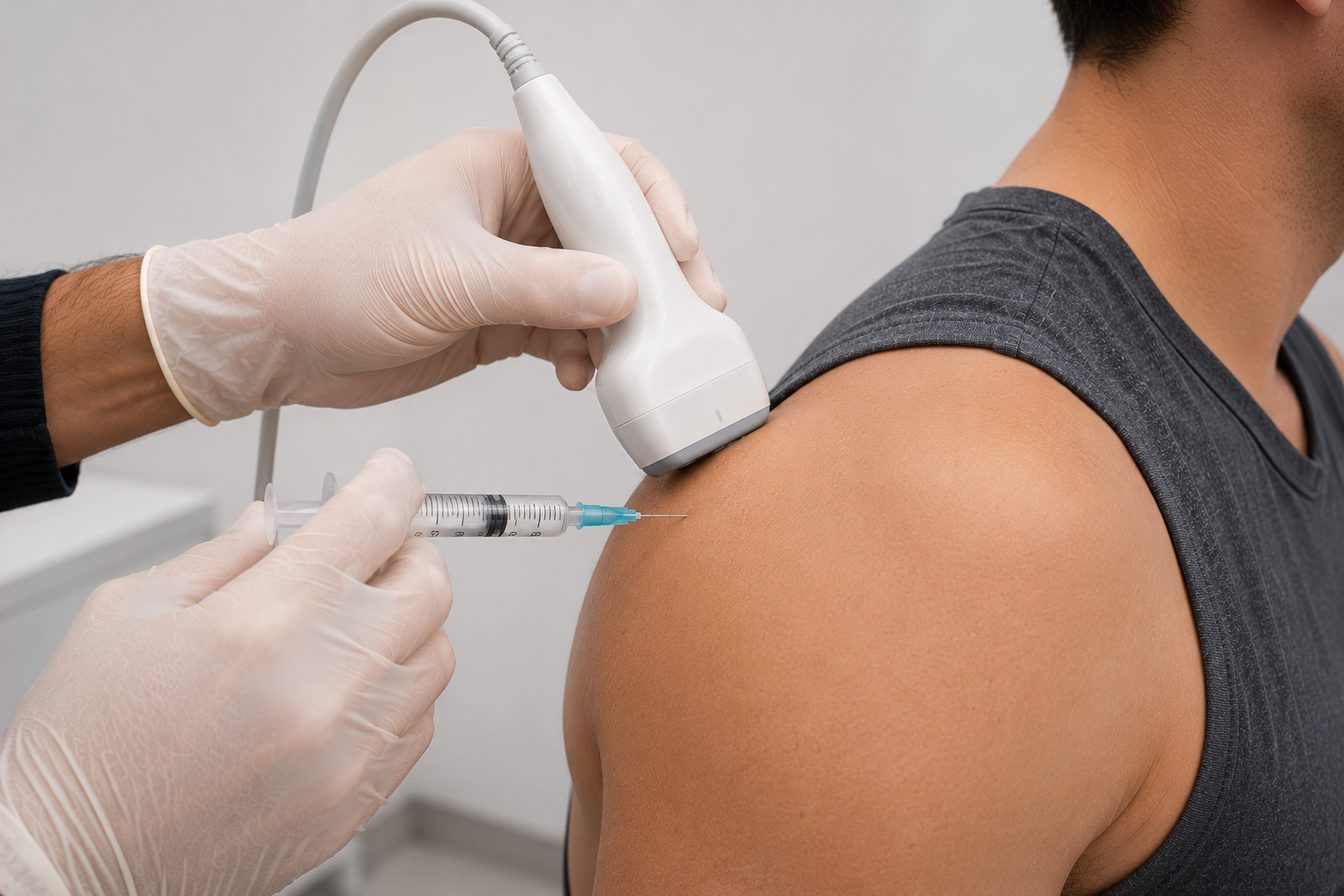
The examination may assess scapular motion, shoulder range of motion, strength, rotator cuff signs, impingement signs, posture, neck mobility, trigger points, neurologic symptoms, and response to scapular assistance or retraction. Imaging may be reviewed when available. Diagnostic ultrasound may be used when it can help evaluate shoulder soft tissue structures or guide treatment.
Treatment Options for Scapular Dyskinesia
Treatment depends on the driver. Many patients need movement retraining, scapular stabilization, rotator cuff strengthening, activity modification, and gradual return to overhead activity. Physical therapy may focus on scapular stabilizers, shoulder mobility, thoracic mobility, posture, load tolerance, and coordination.
If focal muscle pain or trigger points are contributing to symptoms, trigger-point injections may be considered. If shoulder impingement, soft tissue irritation, or another pain generator is identified, ultrasound-guided injections may be considered in selected cases. PRP, BMAC, prolotherapy, or regenerative medicine may be discussed only when the clinical picture supports a specific musculoskeletal target and the risks, goals, and evidence have been reviewed.
When Additional Referral May Be Needed
Orthopedic referral may be appropriate when there is significant shoulder instability, recurrent dislocation, suspected rotator cuff tear, severe impingement, frozen shoulder that is not improving, or structural pathology requiring surgical evaluation. Neurology referral may be needed when there is pronounced winging, progressive weakness, numbness, or concern for nerve injury.
When Symptoms Need Timely Evaluation
Shoulder blade pain or scapular winging should be evaluated when symptoms persist, worsen, limit overhead activity, cause weakness, follow trauma, or are associated with numbness, progressive weakness, fever, unexplained weight loss, severe night pain, chest pain, shortness of breath, or rapidly worsening function. Pain around the shoulder blade can overlap with shoulder, neck, nerve, thoracic, cardiac, pulmonary, or systemic conditions, so red flags should not be ignored.
How MPM Approaches Scapular Dyskinesia Care
MPM approaches scapular dyskinesia through a diagnosis-first, function-focused model. The evaluation considers scapular control, shoulder impingement, frozen shoulder, rotator cuff overload, EDS, hypermobility spectrum disorder, trigger points, nerve injury, cervical referral, neck and upper back mechanics, and chronic pain sensitization.
For patients looking for scapular dyskinesia treatment in Manhattan, MPM offers a careful pain medicine perspective that can work alongside physical therapy, orthopedics, neurology, and rehabilitation. The goal is to determine whether scapular dyskinesia is the cause, compensation, or one part of a larger pain pattern, then build a treatment plan that supports shoulder stability, movement quality, and function.