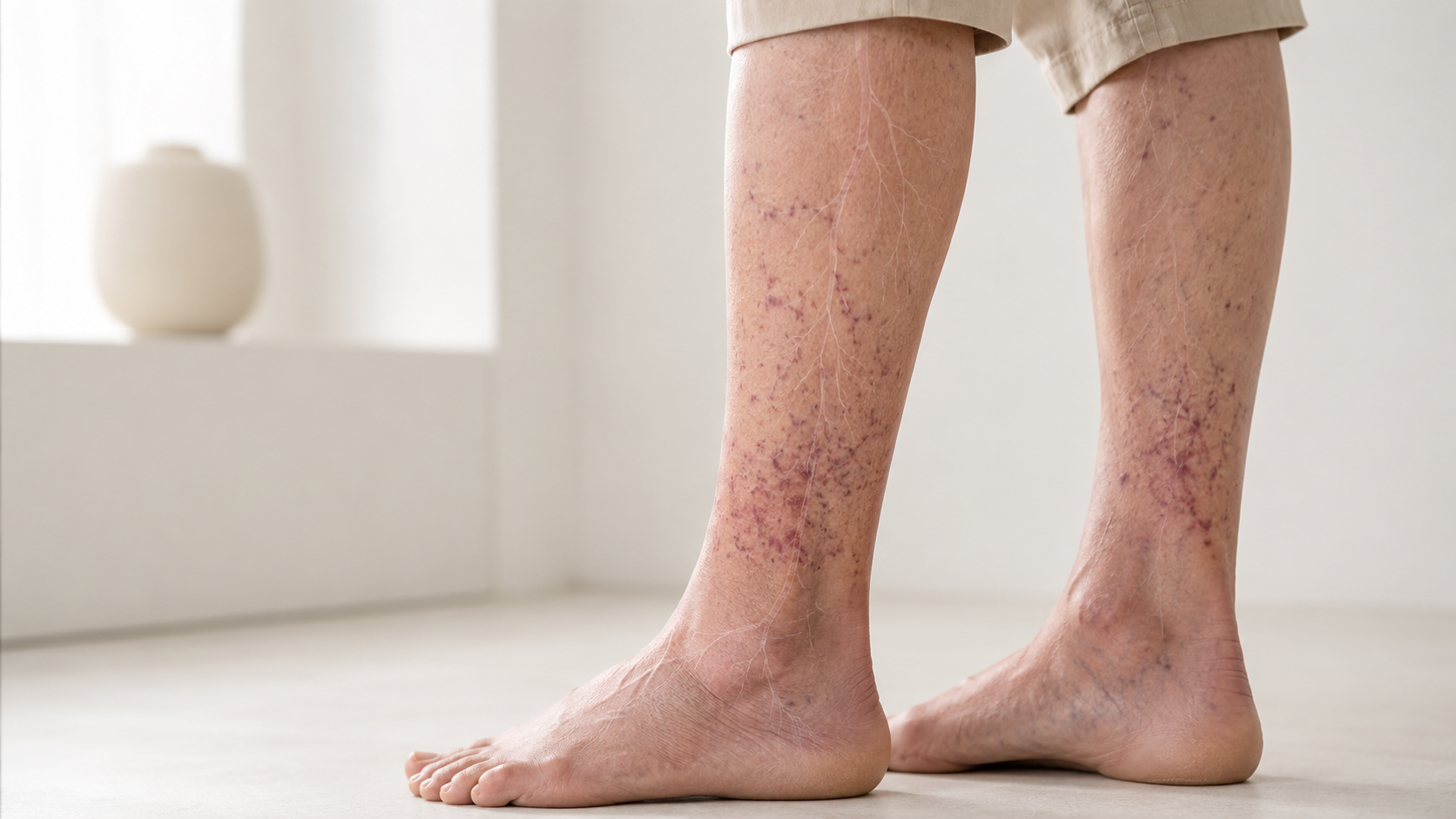
Small Fiber Neuropathy
Small fiber neuropathy is a condition involving the small nerve fibers that help carry pain, temperature, and autonomic signals. These fibers include A-delta and C fibers. When they are damaged or irritated, symptoms may include burning pain, tingling, numbness, itching, stabbing pain, electric sensations, temperature sensitivity, or skin sensitivity. Symptoms often begin in the feet or hands, but they may also be patchy, widespread, or involve other regions.
Sensory and Autonomic Symptoms
Some patients experience mostly sensory symptoms, such as burning, tingling, pins and needles, numbness, itching, or electric pain. Others also experience autonomic symptoms because small autonomic fibers help regulate body functions. These symptoms may include sweating changes, heat intolerance, dizziness, heart rate changes, blood pressure changes, constipation, gastroparesis-like symptoms, bladder symptoms, or abnormal temperature regulation.
This overlap can make SFN difficult to recognize. A patient may first be evaluated for fibromyalgia, POTS, peripheral neuropathy, autoimmune disease, GI dysmotility, anxiety, spine pain, or unexplained chronic pain before small fiber neuropathy is considered.
Why Small Fiber Neuropathy Can Be Missed
Small fiber neuropathy can be missed because standard EMG and nerve conduction studies often focus on large nerve fibers. In pure small fiber neuropathy, those studies may be normal. This can leave patients confused when they have significant burning pain or autonomic symptoms but are told their nerve testing is normal.
A normal EMG does not prove that symptoms are psychological, and it does not automatically rule out small fiber neuropathy. At the same time, SFN should not be diagnosed from symptoms alone. A careful evaluation may include history, examination, prior testing review, laboratory screening, skin biopsy, autonomic testing, and coordination with neurology or rheumatology when appropriate.
Common Causes and Contributors
Small fiber neuropathy may be idiopathic, meaning no clear cause is found. It may also be related to metabolic conditions such as diabetes or impaired glucose tolerance, vitamin deficiencies, thyroid disease, infections, medications, chemotherapy, toxins, hereditary conditions, autoimmune disease, or inflammatory disease.
In MPM’s patient population, symptoms often need to be evaluated in the context of autoimmune-related pain, Sjogren’s, lupus, rheumatoid arthritis, vasculitis, undifferentiated connective tissue disease, psoriasis, MCAS-like symptoms, POTS, gastroparesis, chronic constipation, fibromyalgia, post-viral symptoms, and complex chronic pain. The purpose of evaluation is not to force all symptoms into one diagnosis, but to understand the most likely contributors.
Autoimmune and Inflammatory Overlap
Small fiber neuropathy may be associated with autoimmune and inflammatory disorders in selected patients. This is especially relevant when neuropathic pain appears with dry eyes or dry mouth, joint pain, rashes, inflammatory symptoms, abnormal immune markers, vasculitic symptoms, or a known rheumatologic diagnosis.
When autoimmune small fiber neuropathy is suspected, coordination with rheumatology and neurology may be important. Treatment may involve addressing the underlying inflammatory or autoimmune condition, managing neuropathic pain, improving function, and monitoring for changes over time. Immune therapies, biologics, or infusion-based treatments should only be considered when the diagnosis and specialist evaluation support that approach.
Small Fiber Neuropathy and POTS-Like Symptoms
Some patients with small fiber neuropathy also report autonomic symptoms, such as dizziness, heart rate changes, sweating abnormalities, heat intolerance, GI motility symptoms, or blood pressure changes. These symptoms can overlap with POTS or other forms of dysautonomia.
MPM evaluates whether neuropathic pain and autonomic symptoms may be related, separate, or part of a broader syndrome. This may require coordination with autonomic specialists, cardiology, neurology, GI, rheumatology, or primary care, depending on the patient’s presentation.
How MPM Evaluates Small Fiber Neuropathy-Related Pain
MPM begins with symptom mapping. This includes the location of pain, character of symptoms, triggers, timing, autonomic symptoms, GI symptoms, skin sensitivity, prior testing, medication history, autoimmune history, metabolic risks, post-viral history, and functional impact.
The evaluation also considers whether symptoms may reflect peripheral neuropathy, peripheral nerve entrapment, radiculopathy, central pain syndromes, fibromyalgia, medication effects, thyroid disease, vitamin deficiency, inflammatory disease, or another neurologic condition. This broader approach helps avoid both underdiagnosis and overdiagnosis.
Treatment Options for Small Fiber Neuropathy-Related Pain
Treatment depends on the suspected cause and the dominant symptom pattern. When an underlying cause is identified, addressing that cause is an important part of care. Pain-focused treatment may include medication management, topical therapies when appropriate, acupuncture, biofeedback, pain psychology, sleep support, function-focused strategies, and coordination with other specialists.
For selected patients with refractory neuropathic pain, infusion-based care, ketamine therapy, or lidocaine and ketamine infusions may be discussed only after careful evaluation. These treatments are not appropriate for every SFN patient and should not be presented as treating the underlying nerve disease itself.
Pain Psychology and Biofeedback
Pain psychology and biofeedback can be helpful for patients with chronic neuropathic pain, autonomic symptoms, medical trauma, symptom fear, sleep disruption, or nervous system hypervigilance. These tools do not mean the pain is imagined. They support nervous system regulation, coping, function, and quality of life when pain has become persistent and disruptive.
When Symptoms Require Urgent Evaluation
Patients should seek urgent evaluation for new weakness, rapidly spreading numbness, trouble walking, loss of balance, bowel or bladder dysfunction, saddle anesthesia, fainting, chest pain, shortness of breath, severe allergic symptoms, fever, sudden neurologic changes, or rapidly worsening symptoms. Neuropathic symptoms can overlap with serious neurologic, vascular, infectious, inflammatory, metabolic, spinal, or systemic conditions.
How MPM Approaches Small Fiber Neuropathy Care
MPM approaches small fiber neuropathy through diagnosis-first care. The goal is to identify whether symptoms are most consistent with SFN, another neuropathy pattern, autoimmune or inflammatory disease, autonomic dysfunction, fibromyalgia overlap, GI dysmotility, medication effects, spine-related nerve irritation, or complex chronic pain.
For patients looking for small fiber neuropathy treatment in Manhattan or NYC, MPM offers a coordinated pain medicine perspective focused on symptom mapping, pain control, functional improvement, and collaboration with neurology, rheumatology, GI, autonomic specialists, and primary care when needed.