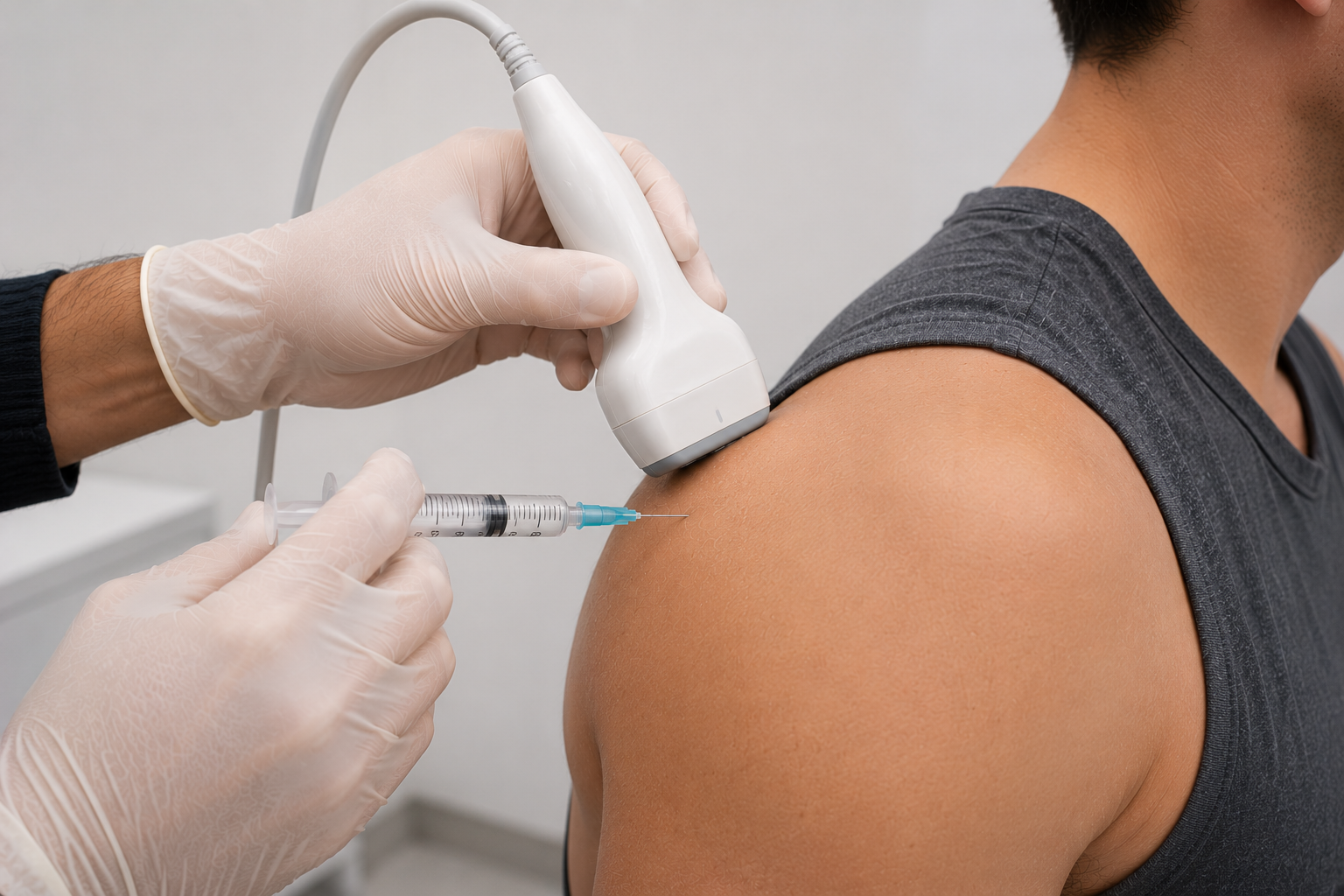
Trigger Point Injections in Manhattan and NYC

Trigger point injections may help selected patients with myofascial pain, muscle spasm, tension headache, pelvic pain, TMJ overlap, or chronic muscle guarding.

Learn how Dr. Siefferman performs trigger point injections to relieve muscle pain, reduce tension, and improve movement as part of a personalized treatment plan.

What Are Trigger Point Injections?

Trigger point injections are targeted procedures used to treat selected painful muscle knots, irritated muscle bands, or myofascial pain patterns. They may be considered when muscle tension, spasm, guarding, or referred pain contributes to symptoms in the neck, back, shoulders, jaw, pelvis, hips, or other areas.

At Manhattan Pain Medicine, trigger point injections NYC care begins with diagnosis-first evaluation. The goal is to determine whether the painful muscle is the primary pain generator or whether it is compensating for another issue, such as joint instability, nerve irritation, spine pain, pelvic floor dysfunction, headache disorder, TMJ dysfunction, hypermobility, or complex chronic pain.

Specialist-Guided Myofascial Pain Evaluation

MPM specialists evaluate whether trigger point injections may be appropriate by mapping the patient’s pain pattern, muscle tenderness, referral pattern, movement limitations, posture, biomechanics, prior treatments, and related diagnoses.Muscle pain may be primary, but it can also be secondary to hypermobility, EDS, joint instability, pelvic floor dysfunction, TMJ dysfunction, piriformis syndrome, tension headache, spine pain, nerve irritation, fibromyalgia, or chronic pain sensitization.

MPM reviews the broader clinical picture before recommending injections, acupuncture, pelvic floor trigger point injections, Botox, medication management, rehabilitation, ultrasound-guided procedures, pain psychology, or another coordinated pathway.

A Targeted Tool for Myofascial Pain

Patients often search for trigger point injections in Manhattan when tight, painful muscles keep returning despite stretching, massage, physical therapy, heat, medication, acupuncture, ergonomic changes, or prior injections. Trigger points may feel like localized knots, taut muscle bands, or tender areas that refer pain into the head, jaw, shoulder, back, pelvis, hip, or leg.

MPM approaches trigger point injections as one part of muscle and pain generator mapping, not as a general muscle shot or permanent cure. For some patients, injections may help reduce muscle irritability enough to support movement, therapy, rehabilitation, or function. For others, repeated trigger points may signal that another driver needs attention, such as joint instability, hypermobility, pelvic floor dysfunction, TMJ dysfunction, posture, repetitive strain, nerve irritation, central sensitization, or unresolved spine or joint pain.

Request An Appointment

Treatment Process

How MPM Approaches Trigger Point Injections

MPM uses a diagnosis-first process to decide whether trigger point injections are the right step for muscle-related pain.
  • 1

    Map the Muscle Pain Pattern

    The process begins with a detailed review of pain location, muscle tightness, referral patterns, movement triggers, posture, activity tolerance, prior injuries, physical therapy history, pelvic floor symptoms, headache patterns, TMJ symptoms, hypermobility, and prior treatment response.
  • 2

    Evaluate Underlying Drivers

    MPM assesses whether trigger points are primary pain generators or secondary compensation from joint instability, EDS, pelvic floor dysfunction, piriformis syndrome, spine pain, nerve irritation, headache disorders, TMJ dysfunction, fibromyalgia, or complex chronic pain sensitization.
  • 3

    Plan the Injection Approach

    When trigger point injections may be appropriate, MPM reviews the target muscles, medication options, risks, alternatives, and expected response. The injection may involve local anesthetic, saline, or another medication when clinically appropriate. Ultrasound guidance may be used in selected cases.
  • 4

    Connect Relief to a Care Plan

    After treatment, MPM reviews the degree, location, timing, and duration of relief. Temporary improvement may support a myofascial pain component. Limited or short-lived relief may suggest the need to address biomechanics, rehabilitation, nerve pain, joint instability, pelvic floor dysfunction, headache care, or another driver.

Trigger Point Injections Across MPM’s Pain Expertise

Trigger point injections fit across several MPM Zones of Expertise because myofascial pain can overlap with pelvic pain, headache, musculoskeletal pain, hypermobility, and complex chronic pain. A patient may have muscle guarding from EDS or joint instability, pelvic floor dysfunction, piriformis syndrome, TMJ dysfunction, tension headache, neck and back pain, fibromyalgia, or chronic pain sensitization.

MPM uses trigger point injections within a coordinated, diagnosis-first framework. The injection may help reduce selected muscle-related symptoms, but it is rarely the entire answer. Treatment planning may also include pelvic floor trigger point injections, acupuncture, botulinum toxin injections, ultrasound-guided procedures, rehabilitation, pain psychology, medication management, headache care, TMJ evaluation, or nerve-focused care. The goal is to match treatment to the actual pain generator and the patient’s broader clinical picture.

Learn More

What to Expect During Trigger Point Injections

Before trigger point injections, MPM reviews the pain pattern, suspected muscles, prior treatments, medications, risks, alternatives, and post-procedure instructions. The clinician identifies the painful muscle bands or trigger points and places a small needle into the targeted area. Depending on the plan, the injection may include local anesthetic, saline, or another medication when clinically appropriate.

Patients may feel brief pressure, soreness, twitching, warmth, temporary numbness, or a short pain flare after treatment. Relief may be temporary and can vary based on the diagnosis, medication used, muscle irritability, and underlying drivers. Some patients may not respond. MPM reviews the response to determine whether trigger points appear clinically meaningful and whether additional care should focus on rehabilitation, pelvic floor therapy, headache care, TMJ care, Botox, acupuncture, or another pathway.

Request An Appointment

PATIENT STORIES

Real Patients. Real Progress.

Hear from patients who came to Manhattan Pain Medicine looking for answers, clarity, and a more thoughtful path forward.
  • Michael O.

    5 star review

    These guys are the best. I've been going here for over 6 years and their familiarity with my Schwannomatosis (most ppl have never even heard of it - its rather rare) and their ability to diagnose my CRPS quickly and accurately and then treat it like I was merely getting a flu shot is just incredible...

    Google

  • John A.

    5 star review

    Highly recommended for those who need Pain Management. Everyone at Manhattan Pain Medicine is extremely nice and helpful. I have had very good interactions with both Dr. Siefferman and Dr. Louis. All of the staff is very responsive. 5 stars.

    Google

  • Rakhee K.

    5 star review

    The providers at Manhattan Pain Medicine are exceptional. I wish I had found them 30 years ago!

    Google

  • Annie R.

    5 star review

    I genuinely can’t say enough good things about the team at Manhattan Pain Medicine. I have MCAS, EDS, and an inflammatory autoimmune disease, and I’ve basically been searching for answers since I was a kid. I had years of unexplained inflammation markers, chronic pain, and allergic reactions despite...

    Google

  • Karine S.

    5 star review

    I have a complex medical history and have seen a lot of doctors over the years. Dr. Mikaberidze and Dr. Siefferman each took the time to really listen and understand everything I had been dealing with. I also appreciated how they work together and communicated about my care. I left with a plan that...

    Google

  • Edwin F-S.

    5 star review

    Sharing my gratitude for the pleasant experience last week during my visit, the medical team provided great care and also treated my session as a learning experience, I left my session with a wealth of knowledge. A big thank you to the kind, and professional staff who welcomed me to the office as a...

    Google

  • Madaline. M

    5 star review

    I cannot say enough good things about Manhattan Pain Medicine. From the moment I walked in, I felt truly cared for and taken seriously. Dr. Nino Mikaberidze, Director of Rheumatology, is exceptional — knowledgeable, compassionate, and incredibly thorough. She takes the time to listen, explains every...

    Google

  • Lauren W.

    5 star review

    Dr Siefferman is the most thorough, patient doctor I have even been to. Currently I travel from miami to nyc to see him because his bed side manner and desire to help is incomparable.

    ZocDoc

  • Dana S.

    5 star review

    This practice is wonderful. I have been a patient of Dr. Siefferman’s since 2019 and he’s extremely helpful and kind. He has brought in a Rheumatologist who is also great. They handle very complex pain issues and always try to find new ways to help me.

    Google

  • Frans M.

    5 star review

    Dr. Siefferman is an incredible doctor! He is extremely diligent and knowledgeable. It feels like you are his only patient. He invests a lot of time and effort into your injuries and concerns. I did not find these wonderful qualities with other pain specialists before, who were always rushed and som...

    ZocDoc

  • Gregory S.

    5 star review

    Dr. Siefferman is a doctor who combines the old world bedside manner of doctors from my childhood (60 years ago) with a sta te of the art embrace of modern technology. It is always a pleasure to have an appointment with him...always has options and solutions to my medical issues. He is truly the doc...

    ZocDoc

  • Judith R.

    5 star review

    Dr. Siefferman is a genius. He is very informed and listens attentively.

    ZocDoc

  • Joshua M.

    5 star review

    Dr. Siefferman and his entire team continue to be efficient, dedicated, and driven by precision and a genuine desire to give fantastic care. Will always recommend.

    ZocDoc

  • Michael W. S

    5 star review

    Doctor Siefferman is fantastic. Have been seeing him for 5 years. Couldn’t recommend more.

    ZocDoc

  • Stephanie G.

    5 star review

    Dr. Siefferman is the ONLY doctor who has ever been able to diagnose my pain and treat it. He is hands down the best

    ZocDoc

FAQs About Trigger Point Injections

Related Muscle and Pain Treatments

Related treatments may be considered depending on the muscle pattern, diagnosis, injection response, and broader care plan.

Understanding Insurance Before You Begin

Before care begins, our team helps patients understand the practical side of treatment, including insurance verification, out-of-network benefits, cost-share estimates, self-pay options, and billing questions. We believe patients should have as much clarity as possible before moving forward.

Insurance & Billing

Request a Trigger Point Evaluation

If you are considering trigger point injections in NYC for muscle pain, myofascial pain, neck or back pain, tension headache, TMJ overlap, pelvic pain, piriformis syndrome, hypermobility-related muscle guarding, or complex chronic pain, MPM can help determine whether this treatment may be appropriate. Your evaluation will consider your symptoms, diagnosis, exa

Request an Appointment

Insights & Research

Explore MPM Insights and Research, including patient-friendly articles, clinical perspectives, and research from our team to help explain how we understand complex pain, evaluate care options, and guide the path to treatment
In Depth

Trigger Point Injections for Myofascial Pain

Trigger point injections may help selected patients when painful muscle bands or myofascial pain contribute to symptoms.

Trigger Point Injections

Trigger point injections are targeted procedures used to treat selected painful muscle knots, taut bands, or myofascial pain patterns. A trigger point may feel like a tight, tender, or irritated area in a muscle. Pressing on it may cause local pain or refer pain to another region, such as the head, jaw, shoulder, back, pelvis, hip, or leg.

At Manhattan Pain Medicine (MPM), trigger point injections NYC care begins with diagnosis-first evaluation. The goal is to determine whether the muscle is the primary pain generator or whether it is guarding because of another issue, such as joint instability, hypermobility, pelvic floor dysfunction, TMJ dysfunction, nerve irritation, spine pain, headache disorder, or complex chronic pain sensitization.

What Trigger Point Injections Are

Trigger point injections place a small needle into selected painful muscle areas. Depending on the clinical plan, the injection may include local anesthetic, saline, corticosteroid in selected cases, or another medication. The goal may be to reduce muscle irritability, improve movement tolerance, and help interrupt the pain and guarding cycle.

Relief varies. Some patients experience short-term improvement, some have longer benefit, and some do not respond. MPM uses the response to help determine whether the muscle target is clinically meaningful and whether additional treatment should focus on rehabilitation, biomechanics, nerve pain, joint instability, pelvic floor dysfunction, headache care, or another driver.

When Trigger Points Are Part of a Larger Pain Pattern

Trigger points may develop after injury, overuse, surgery, repetitive strain, posture changes, physical stress, or prolonged guarding. They may also appear in patients with hypermobility, EDS, joint instability, pelvic floor dysfunction, piriformis syndrome, TMJ dysfunction, tension headache, fibromyalgia, or chronic neck and back pain.

In these cases, trigger point injections may help temporarily reduce muscle-related symptoms, but lasting improvement often depends on addressing the reason the muscles keep tightening. For example, a patient with hypermobility may have muscles that overwork to stabilize joints. A patient with pelvic floor dysfunction may have pelvic and hip muscles that guard reflexively. A patient with TMJ dysfunction may develop jaw, temple, neck, and shoulder trigger points as part of a broader orofacial pain pattern.

Trigger Point Injections for Headache, TMJ, Pelvic Pain, and Piriformis Symptoms

Trigger point injections may be considered for selected tension headache patterns when neck, shoulder, scalp, or jaw muscles contribute to pain. They may also be considered for TMJ-related muscle pain, especially when jaw or temple muscles refer pain into the face, head, or neck. These symptoms still require careful differentiation from migraine, cluster headache, TACs, trigeminal neuralgia, or other headache and facial pain conditions.

For pelvic pain, trigger point injections may be considered when muscle spasm or myofascial pain contributes to symptoms. Pelvic floor trigger point injections are more specialized and require pelvic pain evaluation. For piriformis-related pain, injections may be considered when the piriformis muscle appears to contribute to buttock, hip, or sciatic-type symptoms. Similar symptoms can also come from spine, hip, sacroiliac, pelvic, or nerve-related causes.

Trigger Point Injections vs. Acupuncture, Botox, and Ultrasound-Guided Procedures

Trigger point injections, acupuncture, dry needling, Botox, and ultrasound-guided procedures are not interchangeable. Trigger point injections usually target painful muscle areas with medication or fluid. Acupuncture may support pain modulation through a different treatment framework. Botox reduces selected muscle overactivity through chemodenervation and may be considered for conditions such as dystonia, chronic migraine, TMJ muscle overactivity, or pelvic floor spasm in selected patients.

Ultrasound guidance may be used for selected trigger point injections when the muscle is deeper or near sensitive structures. It does not guarantee relief, but it may support anatomical precision in appropriate cases.

Safety and Realistic Expectations

Trigger point injections are not a cure for chronic pain, fibromyalgia, EDS, hypermobility, pelvic pain, TMJ dysfunction, tension headache, piriformis syndrome, sciatica, or neurologic disease. They are one possible tool when myofascial pain is clinically meaningful.

Risks may include pain flare, bruising, bleeding, infection, allergic reaction, temporary numbness or weakness, dizziness, vasovagal reaction, local anesthetic toxicity, steroid-related side effects when steroids are used, incomplete relief, temporary relief only, or no relief. For injections near the chest, neck, or upper back, rare but serious risks may include pneumothorax or injury to nearby structures.

Patients should seek urgent evaluation for fever, spreading redness, severe swelling, chest pain, shortness of breath, fainting, new weakness, new numbness, bowel or bladder dysfunction, saddle anesthesia, sudden severe headache, severe pelvic or abdominal pain, suspected infection, severe allergic reaction, major trauma, or rapidly worsening symptoms.

For selected patients, trigger point injections may be a useful part of a coordinated pain care plan. MPM’s role is to determine whether the muscle target is appropriate, why the muscle is irritated, and how the injection fits into longer-term treatment.