Jugular Vein Stenosis
Jugular vein stenosis refers to narrowing or compression of the internal jugular vein. The internal jugular veins help drain blood from the brain, head, and neck back toward the heart. When narrowing or compression is present, some patients and clinicians may consider whether venous outflow is contributing to symptoms such as pressure headaches, pulsatile tinnitus, dizziness, visual symptoms, neck pain, or intracranial hypertension-like symptoms.
This area is complex. Jugular stenosis is not a diagnosis that should be made from symptoms alone. Imaging findings also require careful interpretation because venous narrowing can sometimes be incidental, positional, or one part of a broader condition. The clinical question is not only whether narrowing exists, but whether it matches the patient’s symptoms, anatomy, pressure findings, eye findings, neurologic findings, and overall clinical picture.
Symptoms That May Be Discussed With Jugular Stenosis
Patients who search for jugular vein stenosis treatment in NYC may be experiencing pressure headaches, head fullness, pulsatile tinnitus, dizziness, brain fog, blurry vision, double vision, neck pain, head pressure that changes with position, symptoms that worsen with head rotation, or symptoms that overlap with intracranial hypertension.
Some patients may also have EDS, hypermobility spectrum disorder, POTS, MCAS-like symptoms, Chiari malformation, craniocervical instability, CSF outflow concerns, chronic migraine, post-COVID symptoms, or medical trauma from years of unclear symptoms.
These symptoms can be real and disruptive. At the same time, they are not specific to jugular stenosis. They can also come from migraine, vestibular disorders, intracranial hypertension, CSF leak, Chiari malformation, CCI, cervical spine disorders, TMJ disorders, medication effects, inflammatory conditions, neurologic disease, or chronic pain sensitization.
Jugular Stenosis, Intracranial Hypertension, and Pulsatile Tinnitus
Jugular stenosis may be considered in the evaluation of venous outflow obstruction and intracranial hypertension in selected patients. If venous drainage is impaired, symptoms may overlap with pressure-type headache, pulsatile tinnitus, visual symptoms, or head pressure.
However, intracranial hypertension has its own diagnostic pathway. It may require eye examination, optic nerve assessment, visual field testing, MRI or MRV, lumbar puncture with opening pressure measurement, and neuro-ophthalmology or neurology evaluation. Jugular narrowing does not automatically mean a patient has elevated intracranial pressure.
Pulsatile tinnitus can also have many causes. It may arise from venous abnormalities, arterial abnormalities, ear-related conditions, intracranial pressure disorders, vascular tumors, or other structural issues. New, one-sided, worsening, or neurologically associated pulsatile tinnitus should be evaluated carefully.
Jugular Stenosis, CCI, Chiari, and Hypermobility
Some patients with EDS or hypermobility spectrum disorder may have complex symptoms involving headache, neck pain, dizziness, autonomic dysfunction, and upper cervical concerns. In selected cases, patients may also have imaging findings or specialist concern for craniocervical instability, Chiari malformation, or jugular vein compression.
These relationships are clinically important but should be approached carefully. MPM does not assume that EDS, HSD, CCI, Chiari, POTS, or neck pain automatically means jugular stenosis is causing symptoms. The evaluation must consider headache type, upper cervical pain generators, neurologic symptoms, eye findings, venous imaging, CSF pressure concerns, and specialist interpretation.
Why Jugular Stenosis Can Be Missed or Overcalled
Jugular stenosis can be difficult because symptoms are nonspecific and often overlap across specialties. A patient may first be evaluated for migraine, sinus problems, ear symptoms, dizziness, anxiety, POTS, neck pain, Chiari malformation, CCI, or intracranial hypertension. Static imaging may not fully explain dynamic or positional symptoms, while some imaging findings may appear abnormal but not be clinically significant.
This is why MPM focuses on structured evaluation rather than jumping to conclusions. The goal is to determine whether the patient’s symptoms are more consistent with venous outflow issues, headache disorder, upper cervical pain, autonomic dysfunction, musculoskeletal pain, neuropathic pain, vestibular dysfunction, inflammatory disease, or a mixed pattern.
How MPM Evaluates Suspected Jugular Stenosis-Related Pain
MPM begins with a full symptom review, including headache pattern, pressure symptoms, pulsatile tinnitus, visual symptoms, dizziness, brain fog, neck pain, jaw symptoms, autonomic symptoms, positional triggers, head rotation sensitivity, prior diagnoses, prior treatments, and functional impact.
The evaluation may include review of prior imaging and specialist records. Relevant information may include MRI, MRV, CT venography, catheter venography, Doppler ultrasound, neuro-ophthalmology findings, lumbar puncture history, opening pressure results, ENT evaluation, neurology notes, vascular evaluation, neurosurgical opinions, and prior CCI or Chiari assessments.
MPM also evaluates pain generators that may coexist with suspected venous findings. These may include chronic migraine, upper cervical facet pain, myofascial trigger points, cervical dystonia, occipital pain, TMJ dysfunction, CCI-related concerns, hypermobility-related muscle guarding, autonomic dysfunction, post-viral symptoms, medical PTSD, and central pain sensitization.
Treatment Planning and Referral Pathways
Treatment depends on what is actually driving the symptoms. If the primary concern is vascular compression or venous outflow obstruction, care may require referral to vascular specialists, ENT, neuroradiology, neurosurgery, neurology, or neuro-ophthalmology. Procedures such as stenting, angioplasty, styloidectomy, or decompression surgery require specialist evaluation and are not appropriate for every patient.
If symptoms are driven partly by chronic migraine, upper cervical pain, myofascial pain, autonomic dysfunction, hypermobility-related mechanics, or chronic pain sensitization, MPM may support pain-focused care. This may include medication coordination, headache evaluation, pain psychology, biofeedback, Feldenkrais, acupuncture, trigger point injections, or selected image-guided procedures when a specific pain generator is identified.
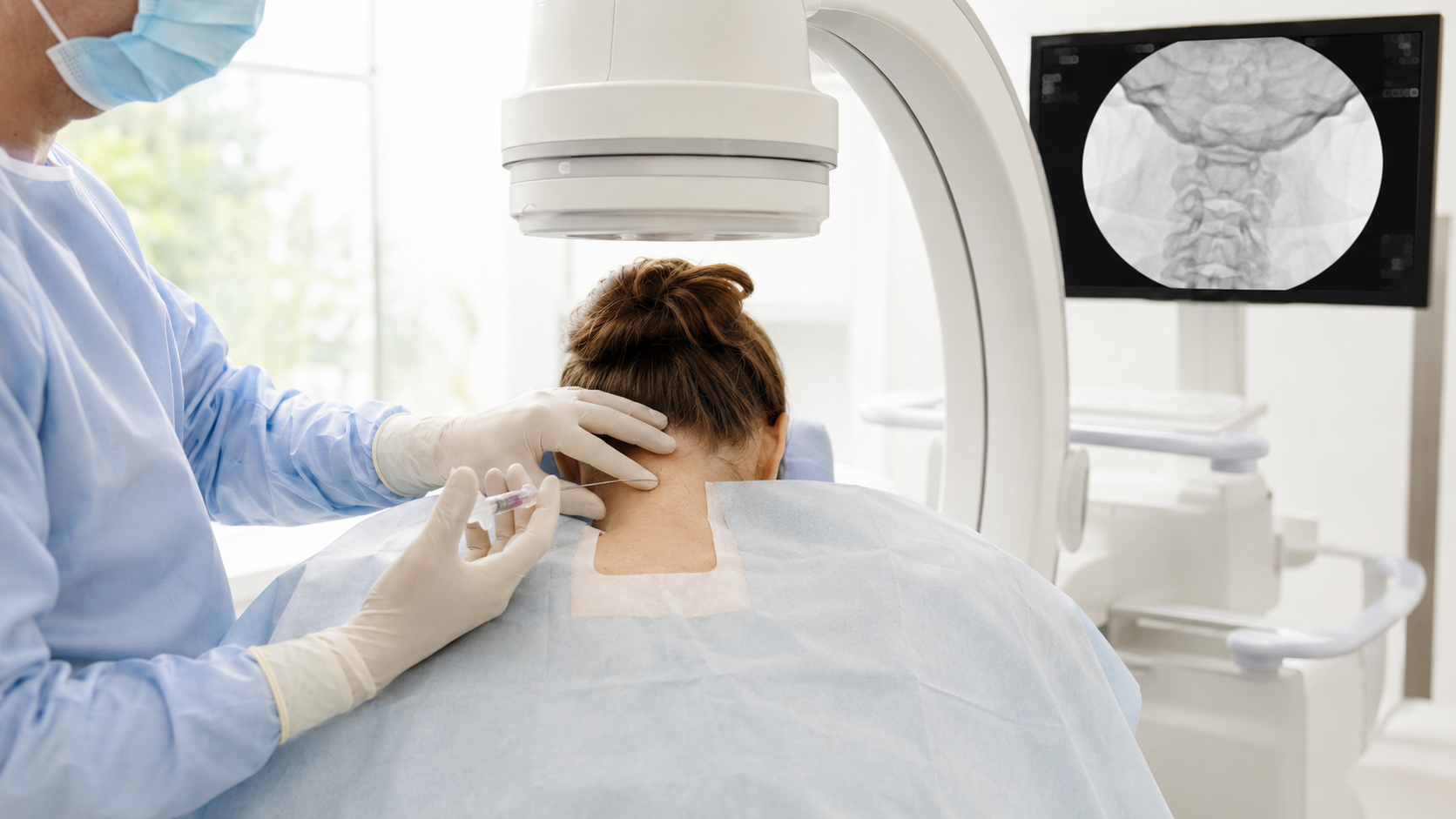
C1/2 facet injections may be considered only when the upper cervical facet joints are strongly suspected contributors to pain. Stellate ganglion blocks, prolotherapy, PRP, BMAC, regenerative medicine, vascular procedures, and surgical interventions should not be presented as standard or universal treatments for jugular stenosis.
Pain psychology and biofeedback may be helpful when chronic symptoms create fear, vigilance, sleep disruption, medical avoidance, trauma physiology, or difficulty functioning. These tools do not mean symptoms are imagined. They can help support nervous system regulation, coping, pacing, and function while appropriate medical evaluation continues.
When Symptoms Require Urgent Evaluation
Patients should seek urgent evaluation for sudden severe headache, new weakness or numbness, vision loss, double vision, confusion, loss of coordination, fainting, trouble speaking or swallowing, new bowel or bladder dysfunction, fever, trauma, severe progressive neurologic symptoms, chest pain, shortness of breath, or rapidly worsening symptoms.
Patients should also seek timely specialist evaluation for progressive visual symptoms, suspected papilledema, new severe pulsatile tinnitus, symptoms concerning for stroke, symptoms concerning for clotting or vascular emergency, or rapidly worsening neurologic function.
How MPM Approaches Jugular Stenosis-Related Care
MPM approaches suspected jugular stenosis through a diagnosis-first, coordinated model. The goal is to clarify the symptom pattern, review available imaging and prior workups, identify coexisting pain generators, and determine which specialists should be involved.
For patients looking for jugular vein stenosis treatment in NYC, MPM provides a careful pain medicine perspective focused on headache, neck pain, autonomic symptoms, hypermobility-related complexity, CCI overlap, Chiari-like symptoms, CSF concerns, medical trauma, and complex chronic pain.
The goal is to help patients understand what may be contributing to their symptoms, avoid premature assumptions, and build a safe, coordinated plan that supports evaluation, function, and appropriate next steps.